
★★★★★ Rated 5.0 on Google · Toronto, ON
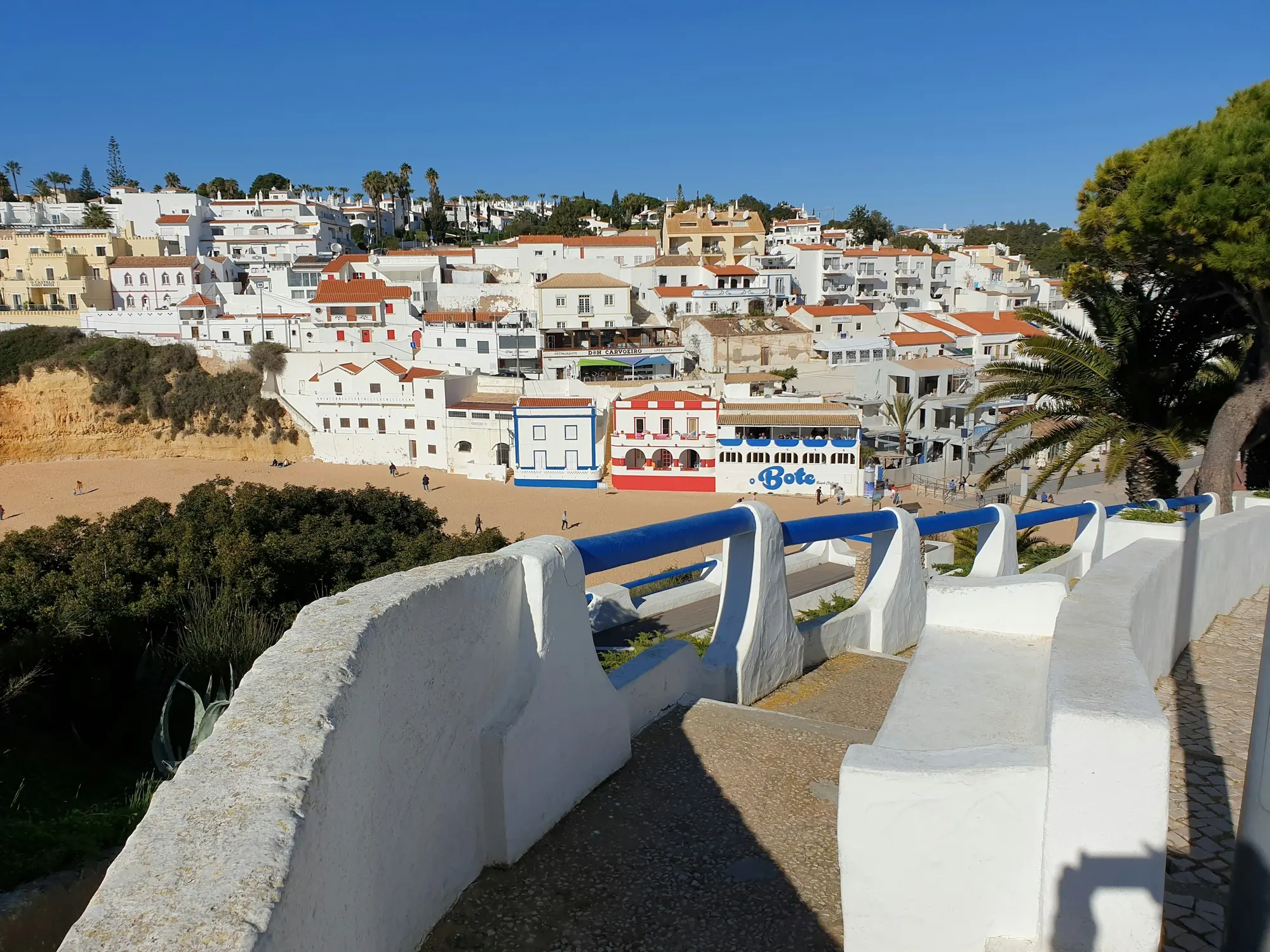
The town of Carvoeiro on the Algarve coast, Portugal – Portugal Digital Nomad Visa
Portugal · Digital Nomad Visa

Portugal digital nomad visa

the D8 digital nomad visa for remote employees and freelancers earning €3,680 a month or more

The Portugal digital nomad visa (D8) gives remote employees and freelancers residence for remote income of at least €3,680 a month, four times the 2026 minimum wage, plus about €11,040 in savings. Choose the two-year residence-permit route if you want residence to count toward the ten-year naturalisation requirement; tax residence follows the move.

Figures verified 27 September 2026 · Licensed CICC consultant, Toronto

Portugal digital nomad visa: key facts, thresholds and eligibility

Remote Income of €3,680 a Month
remote employment or freelance income, averaged over the last three months; 4× the 2026 minimum wage of €920
Savings of €11,040
12× minimum wage for the main applicant; +€5,520 per adult, +€3,312 per child
Available as a Temporary-Stay or Residence Visa
one-year temporary-stay visa, or the residence route with a two-year renewable card
Consular Decision in a Few Months
then AIMA biometrics in Portugal for the residence route
Requirement to Live in Portugal
the residence route expects you to reside; tax residence follows
Citizenship Eligibility After 10 Years
residence route only; from the first card; 7 for EU and CPLP nationals; A2 Portuguese
IFICI 20% Tax Rate for Some Applicants
only for listed high-value activities; NHR is closed; otherwise progressive rates
Employer Based Outside Portugal
you cannot work for a Portuguese company on the D8

Portugal digital nomad visa requirements: income and savings by family size

Thresholds derive from the 2026 minimum wage of €920: income of 4× (€3,680) and savings of 12× (€11,040) for the main applicant, plus 50% per adult and 30% per child on each figure.

Monthly remote income and savings required

  • Single applicant: €3,680 a month income; €11,040 savings
  • Couple: €4,140 a month; €16,560 savings
  • Couple with one child: €4,416 a month; €19,872 savings
  • Couple with two children: €4,692 a month; €23,184 savings
  • Each further adult: +€460 income and +€5,520 savings; each further child: +€276 and +€3,312

What counts as remote income

  • Salary from an employer outside Portugal, shown by contract and three months of payslips
  • Freelance or contractor income from clients outside Portugal, shown by contracts and invoices
  • Income from your own company outside Portugal, shown by accounts and distributions
  • Not counted: pensions, rents or dividends alone (that is the D7)

Documents

  • Employment contract or client contracts; employer letter confirming remote work
  • Three months of payslips or invoices and bank statements showing receipt
  • Tax residence certificate or last return from the US or Canada
  • Portuguese NIF and bank account holding the savings
  • Lease or deed for accommodation in Portugal
  • FBI or RCMP criminal record certificate, apostilled
  • Health insurance covering Portugal; consular fee and AIMA card fee (a few hundred euros per person)

Portugal D8 visa application process and processing times

Filed at the Portuguese consulate for your US state or Canadian province. Choose the residence route if you want residence to count toward naturalisation.

  1. 1

    Income test and route choice 1–2 weeks

    We check the three-month income average against the family threshold and decide between the one-year temporary-stay visa and the two-year residence route.

  2. 2

    Employer or client paperwork 2–4 weeks

    Remote-work letter, contract, payslips or invoices. Applications are most often delayed at this stage; we draft the employer letter for you.

  3. 3

    NIF, bank account, accommodation 3–6 weeks

    Opened remotely through a representative; the savings balance deposited; a lease secured.

  4. 4

    Consular filing and decision 2–4 months

    Application lodged with all evidence. Four-month entry visa on approval (residence route).

  5. 5

    AIMA biometrics and card AIMA appointment within the visa's validity

    Two-year residence card issued after biometrics in Portugal. Residence for naturalisation is counted from this card's date.

  6. 6

    Renewal and beyond years 2–10

    Renew at two years with continued remote income. Permanent residence at five years; citizenship at ten with A2 Portuguese.

Portugal digital nomad visa benefits and risks

What you gain

  • Retain your existing employmentYour US or Canadian income qualifies you; no investment required.
  • Family on the same applicationSpouse, dependent children and dependent parents, with the thresholds scaled.
  • Full residence rightsPublic healthcare, schools, Schengen travel without ETIAS, and time that counts toward citizenship on the residence route.

What could go wrong

  • Tax residence follows the moveProgressive Portuguese rates on worldwide income unless IFICI applies, and it applies narrowly. NHR is closed.
  • Your employer may not cooperatePayroll, social security and permanent-establishment questions make many employers refuse; contractor status changes your own tax position.
  • Canadians face departure tax; Americans keep filingNeither prevents the move; both require planning before it.
  • Ten years to a passportThe May 2026 Nationality Law counts ten years from the first card (seven for CPLP nationals). The temporary-stay visa does not count toward naturalisation.
Jane Katkova, licensed CICC citizenship and residency by investment consultant
Licensed CICC consultancy, Toronto

Plan Portugal residency with a licensed consultant

Jane Katkova has advised on citizenship and residence by investment since 1998. We confirm eligibility, the complete fee schedule and the realistic processing time before you pay anything, and we advise against a programme when it does not fit your circumstances.

  • 25+ yearsadvising on global mobility
  • CICC licensedregulated Canadian consultant
  • 5.0 on Googleclient review rating
  • Toronto officeclients across the US and Canada

Portugal D8 visa compared with the D7 visa and golden visa

D8 digital nomadD7 passive incomeGolden visa
Qualifying money€3,680 a month remote work + €11,040 savings€920 a month passive€500,000 fund or €250,000 donation
Must live in PortugalYesYes: 16 months in 24No: 7 days a year
Tax residenceYesYesOnly if you move
Best forRemote employees and freelancersRetirees, investment-income householdsThose keeping their life in the US or Canada
Citizenship10 years from first card (residence route)10 years from first card10 years from first card

Who the Portugal D8 visa suits: US and Canadian applicants

For US and Canadian citizens

If you work remotely for a US or Canadian employer, or bill clients from home, the D8 is the permit that lets you move to Portugal without €500,000 in a fund. You become Portuguese tax resident once you live there; your employer's payroll and social-security position needs checking, because many US and Canadian employers will not run payroll for a Portugal-based employee and ask you to switch to contractor status. Americans keep filing US returns, FBAR and FATCA; the foreign earned income exclusion or foreign tax credits and the US–Portugal treaty handle most of the double tax. Canadians who sever ties face departure tax on deemed dispositions and should decide what to do with RRSPs and TFSAs before leaving. IFICI may give you 20% on qualifying work income for ten years if your activity is on the list; confirm before you count on it.

For US and Canada residents on another passport

The D8 works on any nationality if the remote income and savings are documented. It requires relocation, so it is a relocation permit, not a contingency residence held from Toronto or New York. Long absences end most US and Canadian statuses, so sequence the two decisions. Naturalisation takes ten years from the first card (seven on a CPLP passport) with A2 Portuguese; the one-year temporary-stay visa does not count toward it.

Request a written D8 digital nomad visa assessment

Send us your last three months of income, your employer's position on remote work abroad, and your family size. We reply in writing with the route, the consulate and the tax questions to settle before you go. Jane Katkova, licensed CICC consultant, Toronto.

Frequently Asked Questions

Portugal residency: your questions answered

How much do I need to earn for the Portugal digital nomad visa in 2026?

€3,680 a month, four times the 2026 minimum wage of €920, averaged over the last three months, from employment or freelance work for clients outside Portugal. You also need about €11,040 in savings in a Portuguese account. Add €460 income and €5,520 savings per additional adult, €276 and €3,312 per child.

What is the difference between the temporary-stay and residence versions?

The temporary-stay visa lasts one year, is renewable, and does not lead to residence or citizenship. The residence route gives a four-month entry visa, then a two-year residence card that renews and counts toward permanent residence at five years and citizenship at ten. Nearly all our clients choose the residence route.

Will I pay Portuguese tax on my US or Canadian salary?

Yes, once you are Portuguese tax resident, at progressive rates, unless you qualify for IFICI's 20% rate on listed high-value activities. The US–Portugal and Canada–Portugal treaties and foreign tax credits prevent double tax. Americans still file US returns and FBAR; Canadians who leave face departure tax.

Can I work for a Portuguese company on the D8?

No. The D8 is for income from outside Portugal. Taking a Portuguese job requires a change of permit type. Freelancers may take Portuguese clients as a minority of income once resident, but the qualifying income must come from abroad.

How long until Portuguese citizenship on the D8?

Ten years of legal residence counted from your first residence card, under the Nationality Law in force since 19 May 2026 (seven for EU and CPLP nationals), plus A2 Portuguese and a clean record. Only the residence route counts.

Jane Katkova, founder of Fast Passport Boutique and licensed CICC consultant for citizenship and residency by investment
Talk to Jane Katkova's team

Discuss Portugal with a licensed consultant

A confidential consultation with a licensed CICC consultant. We assess eligibility and total cost before you commit to any programme.

  • Licensed CICC consultant
  • Toronto office, clients across the US and Canada
  • Confidential first consultation
Reviewed by our clients on GoogleLicensed CICC MemberAdvising HNW families since 1998