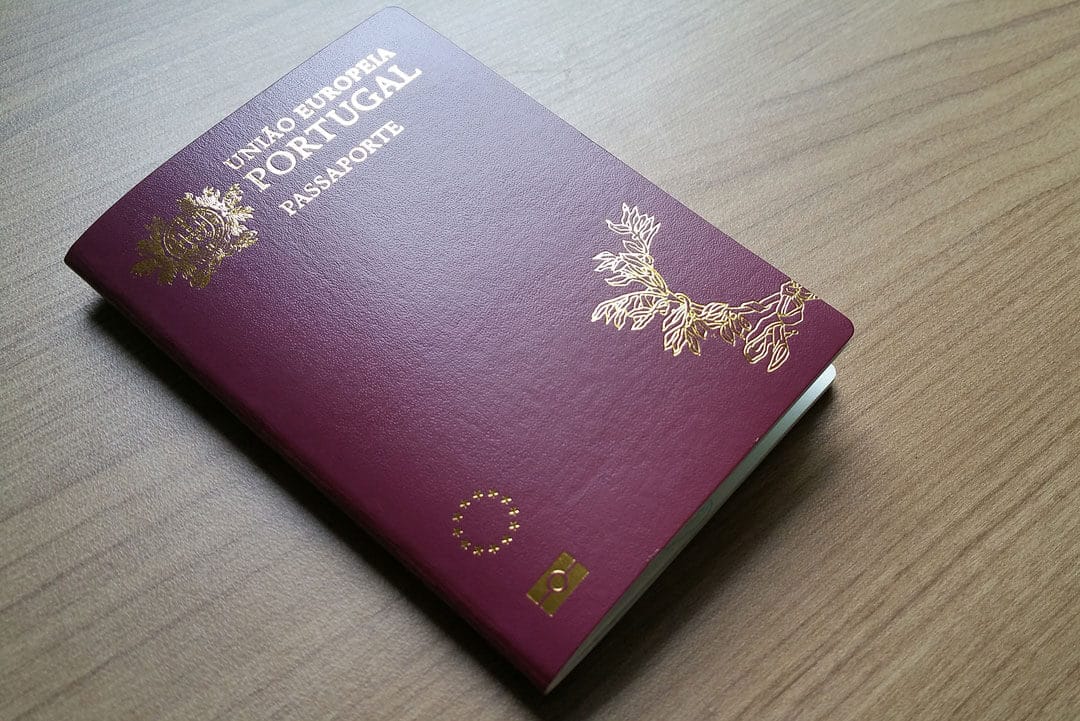
Every few months a fresh list of the most powerful passports 2026 circulates — Japan at or near the top, Singapore a fraction behind, a cluster of European states filling out the leaderboard. It is irresistible content, and it is almost always read the wrong way. A passport ranking is a scoreboard for a game you may not be playing. The question worth asking is not whether your passport places 1st or 41st, but whether it opens the specific doors your own life requires.
What "Passport Power" Actually Measures
Nearly every passport ranking rests on one number: how many destinations the holder can enter without arranging a visa in advance. The best-known indices survey roughly 200 destinations, count each one offering visa-free entry, a visa on arrival or a simple electronic authorisation, then sort descending. That is the whole methodology — a fair proxy for freedom of movement, with limits the headline rarely survives:
- Every destination counts equally. A country you visit monthly and an island you will never set foot on contribute the same single point.
- It counts access, not the quality of access. Ninety days and fourteen days score identically, as do tourist-only entry and entry permitting business.
- "Visa-free" is doing a lot of work. Visa-on-arrival and electronic authorisations still mean forms, fees and the occasional refusal — and Europe's incoming ETIAS requirement will apply to many currently visa-free travellers.
The Most Powerful Passports in 2026: Who Leads the Index
The top tier has been remarkably stable. Japan, Singapore and South Korea have led or shared the lead for years, alongside EU states including Germany, Italy, Spain and France, with the strongest passports typically reaching around 190 or more destinations. Positions shuffle each quarter as bilateral agreements are signed, suspended or restored.
Which is exactly why you should not trust a number in an article — including this one. The Henley Passport Index updates quarterly and is the most widely cited source; Passport Index offers a second view on a different methodology. Because providers count borderline cases differently, follow one index over time rather than mixing sources — and check the live ranking before deciding on the strength of it.
Rank the Passport Against Your Life, Not the League Table
Here is the reframe that makes all of this useful, and it is the most important idea in this article. An index counts destinations in aggregate. You do not travel in aggregate. You travel to a specific, fairly short list of places — where your family is, where your business is, where your children study, where you would go if you needed to leave quickly.
So run the real test. Write down the destinations you actually use, and those you expect to use over the next five years, then check each against the passport in question. That list is your score; the index total is trivia. In practice, a handful of questions decide most cases:
- Does it cover the Schengen Area? For most people the single largest unlock — one entry condition covering the bulk of Europe.
- Does it cover the United Kingdom? Often a separate answer from Schengen, and often the deciding one.
- Does it cover China? Rarely visa-free even for otherwise strong passports — a genuine differentiator, and one concrete reason clients with business in Asia choose Grenada.
- Does it cover the United States? Be honest here: no Caribbean CBI passport delivers visa-free US entry, and no ranking position changes that.
- Does it cover the hubs you route through? The UAE, Singapore and Hong Kong matter more to a frequent traveller than a dozen destinations they will never book.
A passport ranked thirtieth that covers all five of your answers outperforms one ranked tenth that misses two. That is what global mobility means as a personal calculation rather than a league position.
Where CBI Passports Sit in the Most Powerful Passports 2026 Rankings
Set expectations honestly. The Caribbean citizenship programmes typically deliver roughly 140 to 150-plus destinations, generally including the Schengen Area and the United Kingdom — a strong travel document that sits below the top-tier European and East Asian passports.
Whether that gap matters depends on where you start. For someone already holding a top-tier passport, a Caribbean citizenship adds little pure mobility — which is why they rarely acquire one for travel alone. For someone whose passport reaches 40 to 70 destinations, where ordinary business travel means visa applications, interviews, sponsor letters and the standing possibility of refusal, the change is not incremental. It is the difference between planning trips and applying for permission to take them. That is the real value of visa-free travel on a second passport: the question is never "how high does this rank" but "how far does this move me".
| Passport tier | Typical visa-free reach | What it practically unlocks |
|---|---|---|
| Top tier (Japan, Singapore, South Korea, leading EU states) | Around 190+ | Near-frictionless travel; EU members add the right to live and work across the Union |
| Other EU member states | Around 170–190 | Broad access plus full EU residence and work rights |
| Caribbean CBI (Antigua & Barbuda, Dominica, Grenada, St Kitts & Nevis, St Lucia) | Roughly 140–150+ | Schengen and UK commonly included; no visa-free US entry; Grenada adds China and a US E-2 treaty |
| Restricted passports | Roughly 40–70 | Advance visa applications for most travel |
These are indicative ranges that move with every quarterly update. Programme terms and thresholds change too, and we will confirm the current figures for your situation on a call. If you are weighing the routes themselves rather than destination counts, our overview of citizenship by investment sets out how the programmes work.
EU Citizenship Is a Different Asset Class
A Caribbean passport is a travel document, and a good one. An EU passport is something else entirely, and no passport ranking can see the difference. Alongside its visa-free reach, EU citizenship carries the right to live, work, study, retire and establish a business in any member state — no visa, no sponsor, no quota. An index scores Portugal and Grenada on the same axis; in what they entitle you to do, they are not comparable.
Malta is the European route most often raised here — but it should no longer be raised as a way to buy an EU passport: the Court of Justice of the European Union ruled Malta’s investor-citizenship scheme contrary to EU law in April 2025 (Case C-181/23), and the route was wound down. Maltese citizenship is now reached the ordinary way, through lawful residence and naturalisation over a period of years. Malta separately offers a residency route through the Malta Permanent Residence Programme, a materially different proposition: residence in Malta and Schengen travel, not EU citizenship or the right to work across the Union.
That distinction is where most confusion lives: a residence permit lets you live in one country, while only citizenship carries EU-wide rights. Some residence routes bridge the two over time — the Portugal Golden Visa, whose residential real-estate option was removed in 2023 while fund and other routes remain, can lead to naturalisation after a qualifying period. A longer path to a stronger asset. We set the two side by side in our comparison of Caribbean versus European citizenship by investment.
Two Passports Combine — and Mobility Is a Moving Target
A second citizenship does not replace your first; it adds to it. Your practical mobility becomes the union of both documents, not the better of the two: where your original passport performs well you keep that, and where it does not, the second covers the gap. Travellers routinely use one document for one region and the other elsewhere, choosing whichever produces the simpler entry.
The larger caveat is that none of this is permanent. Visa-free access is granted by the destination country, not conferred by the country that issued your passport. It is a concession, and concessions can be narrowed or withdrawn: arrangements involving citizenship-by-investment states have been reviewed and, in individual cases, revoked in recent years, and Caribbean access to Europe and the UK has been subject to periodic review. Treat mobility as a moving target, not a fixed asset.
Hence the practical conclusion: never acquire a citizenship for one destination. Judge the portfolio of access as a whole, and weigh the credibility of the programme behind it — those with rigorous vetting and strong visa-free travel standing are least likely to see their arrangements curtailed. The quality of the due diligence is itself part of the mobility you are buying.
Passport power is a useful shorthand and a poor decision rule. If you would like to know what a second citizenship would actually change for the places you travel — and where it would change nothing at all — book a free, confidential consultation with Jane Katkova and our team. We will test the options against your real list of destinations and tell you plainly whether the move is worth making.