Ask most investors what they want and the answer is a stronger passport. Ask what they actually need and the answer is often different. The choice between citizenship by investment vs golden visa turns on a single distinction: citizenship by investment gives you a passport — usually in months, and usually without requiring you to live anywhere. A golden visa gives you residency — the right to live in a country — which may lead to a passport years later, if you satisfy conditions most applicants never plan for.
Citizenship by Investment vs Golden Visa: The Core Difference
Citizenship by investment (CBI) is a legislated route where a government grants full citizenship in exchange for a qualifying economic contribution — typically a donation to a national fund or an approved real-estate purchase — after strict due diligence. You become a citizen, passport included. You can pass that status to your children, and in most cases you never have to set foot in the country.
A golden visa is not citizenship at all. It is a residence permit granted in exchange for a qualifying investment — a fund subscription, a business, sometimes property. It grants the right to live, work and study in that country, and it must be renewed. Whether it ever becomes a passport depends on you actually moving there for years, passing a language test, and satisfying naturalisation rules the country can change while you wait. Our guide to citizenship vs residency by investment goes deeper.
Citizenship by Investment vs Golden Visa: Side by Side
The trade-offs below stand as they generally do in 2026. Treat every figure as a starting point, not a quote. Program terms and thresholds change — we'll confirm the current figures for your situation on a call.
| Citizenship by investment | Golden visa (residency) | |
|---|---|---|
| What you get | Full citizenship and a passport, for life | A renewable residence permit — the right to live, work and study |
| Typical cost | From approximately US$200,000 via donation, or real estate from roughly US$200,000–$325,000+, plus fees | Varies widely by country — commonly from roughly EUR 250,000 to EUR 500,000+ depending on the route |
| Typical timeline | Typically around 4–9 months, start to passport | Months to over a year for the permit; citizenship, where available, generally 5–10 years further on |
| Physical residency required? | Generally none — a few programs ask only for a short visit or oath | Varies from a few days a year to full relocation; naturalisation demands real presence |
| Path to a passport? | Immediate — it is the passport | Possible in some countries after years of lawful residence; conditional, never guaranteed |
| Travel rights | Visa-free or visa-on-arrival to roughly 140–150+ destinations, usually including the UK and Schengen | Schengen short-stay travel while the permit is valid; the right to live in that one country |
| Family inclusion | Spouse and children; many programs also allow parents, grandparents and siblings | Spouse and dependent children; sometimes dependent parents |
| Tax exposure | Citizenship alone generally does not create tax residency | If you relocate and become tax resident, that country's rules apply to you |
What a Golden Visa Gives You That a Caribbean Passport Cannot
One thing — and it is decisive: the right to actually live in Europe. A Caribbean passport lets you visit the Schengen Area as a tourist, on tourist terms. It does not let you move to Lisbon, enrol your children in local schools, register with the public health system, or build a life from an EU address. A golden visa does. That is the whole point of residence by investment: it buys presence, not merely passage. If your plan genuinely involves relocating, European residency is the only one of the two that delivers what you are picturing — and the only one that can mature into an EU passport with full free movement.
What a Caribbean Passport Gives You That a Golden Visa Cannot
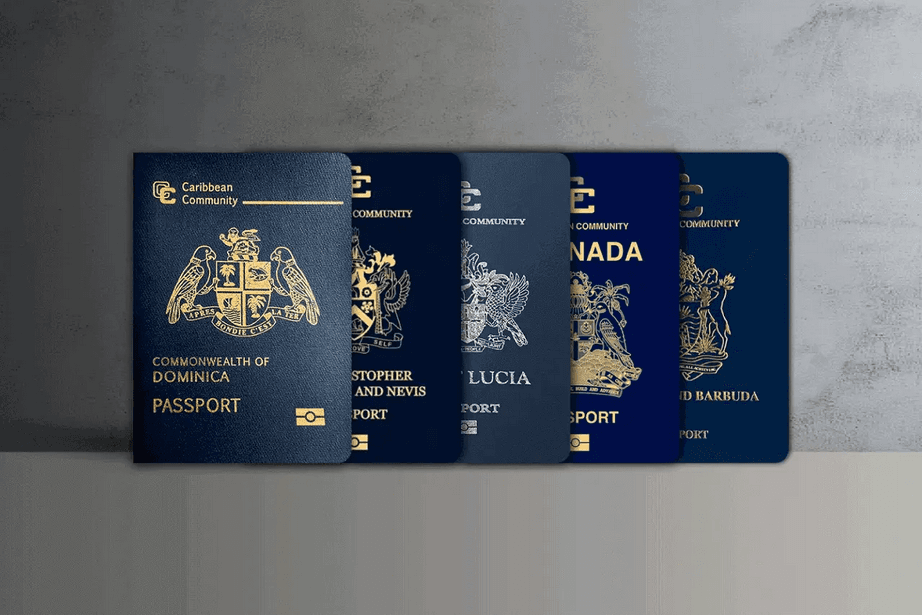
Speed, finality, and the freedom not to move. Caribbean citizenship programs — Antigua & Barbuda, Dominica, Grenada, St Kitts & Nevis and St Lucia — generally conclude in roughly four to nine months, with no relocation and no language exam. The travel access is immediate rather than theoretical, and the citizenship passes to your descendants. A residence permit, by contrast, lives and dies by its renewal calendar: a golden visa you never live in is an expense that expires, while a passport you rarely use is still a passport. For a fuller treatment, see our comparison of Caribbean vs European citizenship by investment.
Europe Has Been Tightening — and the Rules Keep Moving
The honest context for any CBI vs golden visa decision in 2026 is that Europe has spent three years narrowing these doors. Ireland closed its Immigrant Investor Programme in February 2023 at barely a day's notice. Portugal removed the residential real-estate route from its Portugal Golden Visa in late 2023, though fund, cultural-donation and job-creation routes remain open. The Netherlands ended its investor scheme in 2024. Spain closed its golden visa to new applicants in April 2025. Greece has repeatedly raised thresholds in its highest-demand areas.
At citizenship level the signal is sharper. In April 2025 the Court of Justice of the European Union ruled that Malta's investor citizenship scheme was contrary to EU law, holding that it amounted to the commercialisation of EU citizenship. The European Commission has flagged security, money-laundering and corruption risks in these schemes for years. Malta's separate residency programmes continue.
The pattern is not that European routes are vanishing — Italy's and Hungary's remain, and Portugal still processes applications. It is that they are becoming more expensive, slower and more conditional, and rules can shift between the day you research and the day you file. Verify everything, including this, before you commit.
CBI vs Golden Visa: Which Should You Choose?
The frequent-flyer business owner
You travel constantly, your business is portable, and your passport costs you visas, delays and occasionally deals. You have no intention of moving. Choose citizenship by investment: the value is mobility and a hedge, delivered in months, with nothing to maintain. If US market access matters, note that Grenada is currently the only Caribbean CBI country with a US E-2 investor treaty.
The family that wants to relocate to Europe
Schools, healthcare, a home, a real life in one place. Choose the golden visa — the only instrument of the two granting the right to live there. Go in understanding that the residency is the product, and the passport a possible bonus after years of genuine presence, language study and naturalisation rules that may move. If you would not actually relocate, do not buy it.
The Plan-B seeker
You want optionality: insurance against political, economic or currency risk at home, with no plan to move now. Citizenship by investment usually fits better. A Plan B that requires your physical presence to stay alive is not much of a Plan B. A passport can sit in a drawer for a decade, still work, and still pass to your children.
Some clients sensibly do both — a Caribbean passport for immediate mobility, a European residency for the relocation they intend to make. The two solve different problems; it was never really a contest.
Where to Go From Here
The question was never which product is better, but which problem you are solving. On tax, note that this is general information: liability follows residency rather than the passport you hold, and you should take advice from a qualified cross-border professional before acting.
We would rather tell you which route you do not need than sell you both. If you would like to match this to your own situation, our companion decision guide — golden visa vs citizenship by investment: which is right for you — walks six buyer profiles and a quick scorecard. Book a free, confidential consultation with Jane Katkova and our team, and we will map each option against your actual plans — including the thresholds, timelines and rules as they stand the week you apply.